
Toccoa River Fishing Report September, 2026
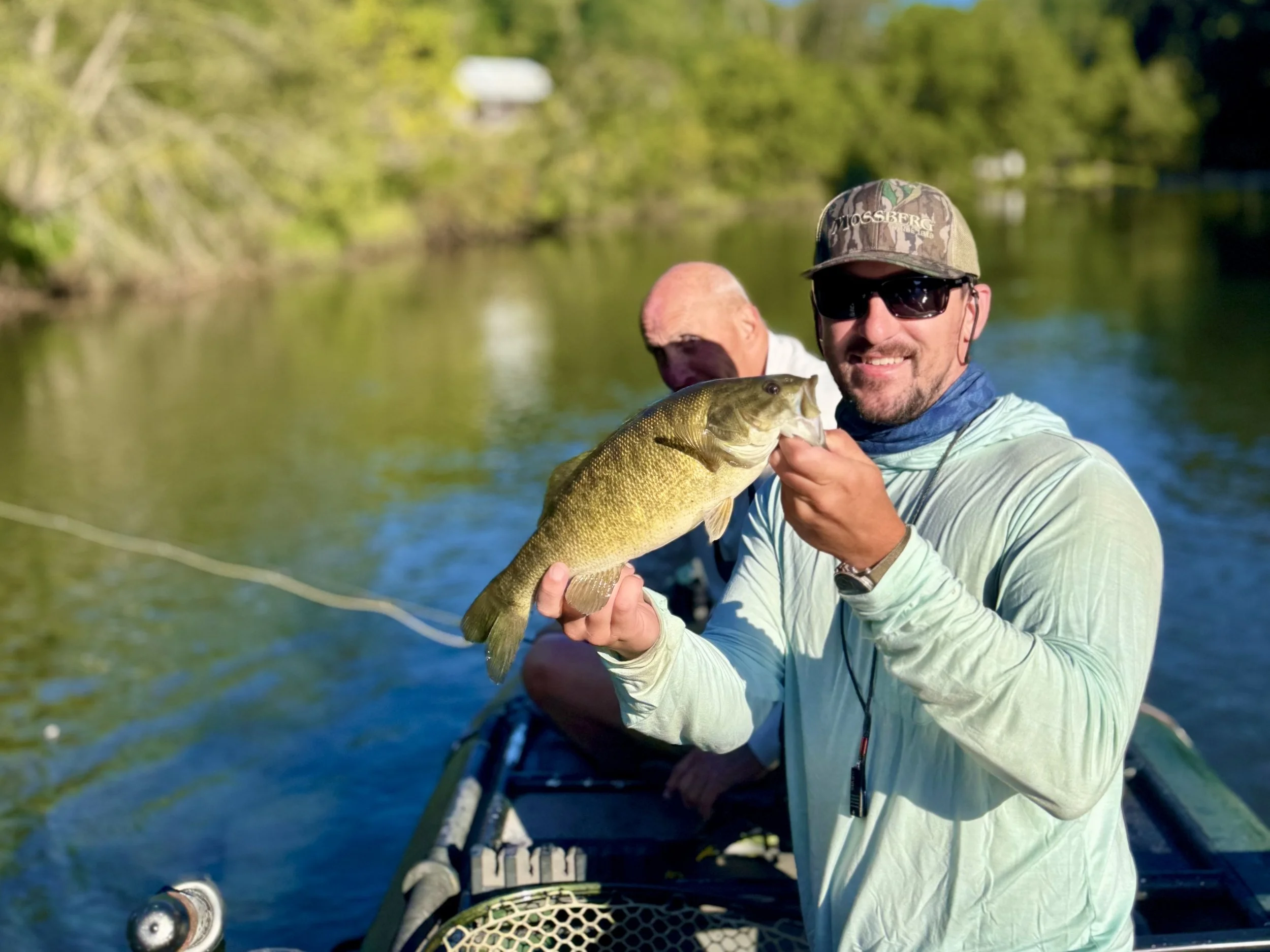
Smallmouth bass caught on a recent float trip on the Toccoa River.
September has brought warmer water temperatures to the Toccoa River, making it more important to plan your day around the coolest water and times of day.
The best fishing has been early in the morning on the upper end of the tailwater. Tammen Park and Curtis Switch are your best bets because they’re closer to Blue Ridge Dam, where the water is coldest. As the water moves downstream and the day heats up, temperatures can climb quickly and fishing becomes less consistent.
If you’re planning a fly fishing trip in Blue Ridge this September, get an early start, carry a thermometer, and keep an eye on water temperatures throughout the morning.
For more updates and seasonal patterns, visit our full Toccoa River fishing reports page, where we regularly share current conditions, fly recommendations, and trout fishing updates from Blue Ridge, Georgia.
Toccoa River Conditions
Toccoa River Tailwater
Water temperatures are continuing to warm throughout the Toccoa River tailwater. The coldest water is still closest to Blue Ridge Dam, which makes the upper stretches around Tammen Park and Curtis Switch the most dependable places to fish. Morning water temperatures have been around 64°F at Tammen Park, 65°F at Curtis Switch, and 68°F at Horseshoe Bend.
Early mornings have been the best window. As the sun gets higher and the water travels farther downstream, temperatures rise and trout become less active. We’re avoiding the lower sections of the river when temperatures get too warm and recommend checking the water regularly with a thermometer.
Always check the TVA generation schedule before heading to the river. Water levels can rise quickly after generation begins, and the schedule will play a major role in deciding where and when you can safely fish.
Upper Toccoa River
The Upper Toccoa is still too warm for trout fishing during September. Delayed Harvest regulations begin November 1, and we’ll begin spending more time on the Upper Toccoa once cooler fall weather arrives and stocking resumes.
Fishing Conditions & Trout Behavior
The cooler morning hours have provided the best fishing. Trout are still feeding in riffles, current seams, pocket water, and deeper runs, especially near the upper end of the tailwater.
A dry-dropper rig has continued to work well in the mornings. Purple and orange Chubby Chernobyls are producing on top while also making great indicator flies for smaller nymphs below.
As temperatures climb, trout become more stressed and less willing to feed. If the water gets too warm, it’s best to stop fishing rather than continue handling fish under stressful conditions.
Flies That Are Working
Fly selection has varied from day to day, but these patterns have been the most consistent:
Purple Chubby Chernobyl (12–14)
Orange Chubby Chernobyl (12–14)
Frenchie (14–18)
Duracell (14–18)
Blowtorch (14–18)
Jigged Pheasant Tail (16–18)
Egg Pattern (14–16)
Good presentations and natural drifts remain more important than constantly changing flies. Adjusting weight and depth to reach the fish has made the biggest difference.
Looking Ahead
As we move toward October, water temperatures will continue to remain a concern until cooler weather settles into North Georgia and Lake Blue Ridge begins its fall transition.
October can be an unpredictable month on the tailwater, so we’ll continue monitoring temperatures closely and adjusting where and when we fish. The Upper Toccoa Delayed Harvest season begins November 1, which will provide another good option once cooler water and fall stocking return.
September Fly Fishing Summary
September fishing on the Toccoa River requires a little more planning. Early mornings near Tammen Park and Curtis Switch are your best bet because those areas receive the coldest water coming from Blue Ridge Dam.
Purple and orange Chubby Chernobyls have been working well for dry-dropper rigs, while Frenchies, Duracells, Blowtorches, Pheasant Tails, and egg patterns have been our most productive nymphs.
Get an early start, check the TVA generation schedule, and carry a thermometer. When the water gets too warm, it’s time to call it a day and give the trout a break.
If you’d like help choosing the best section and time of day, learn more about our guided fly fishing trips in Blue Ridge.
September Toccoa River Fly Fishing FAQs
-
September can offer good fishing, especially during the cooler morning hours. As water temperatures rise later in the day, we focus on the upper portion of the Toccoa River Tailwater near Tammen Park and Curtis Switch.
-
Early morning is usually the best time. Water temperatures are coolest around sunrise and gradually warm throughout the day. Starting early gives anglers the best fishing conditions while reducing stress on the trout.
-
Productive September flies include purple and orange Chubby Chernobyls, Frenchies, Duracells, Blowtorches, Pheasant Tails, and egg patterns. A Chubby-dropper rig can be an effective way to cover both the surface and deeper water.
-
We begin fishing cautiously as temperatures approach 66°F. At 66°F and above, trout have less available oxygen and experience greater stress, so we may move upstream, fish only during the early morning, or avoid that section of river all together.